
Morning
The Laser Hat
256 medical-grade laser diodes, no LEDs. 25 minutes, 3–5 days a week, hands-free.
Hair transplant without finasteride
Your grafts don't need it. Your native hair needs protecting. Here's how we do both — without hormonal drugs.
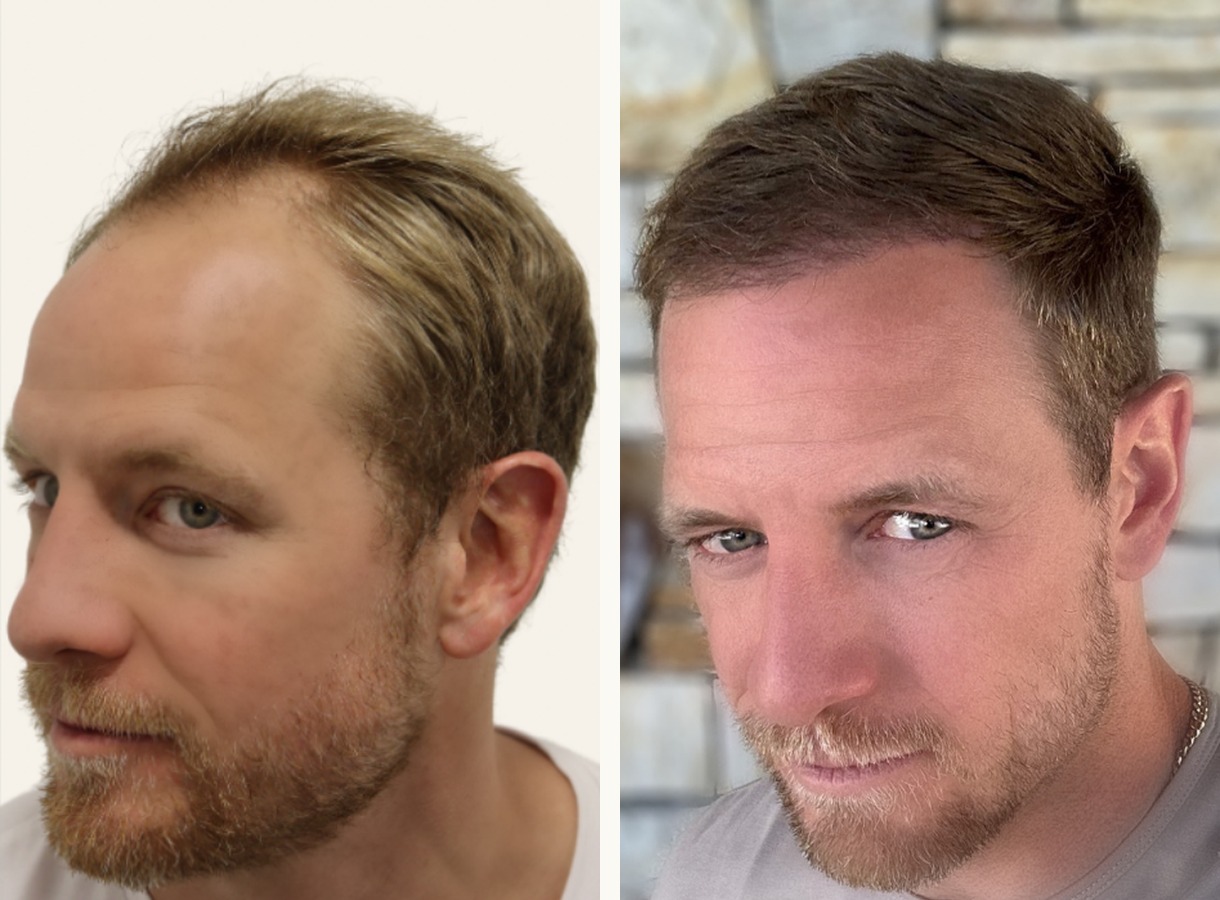
Transplanted hair comes from the back and sides of your head, which is genetically resistant to DHT — the hormone behind pattern hair loss. It keeps that resistance in its new spot. Your grafts don't need finasteride or dutasteride to survive or to last.
Many of our patients come to us after trying finasteride or dutasteride and stopping because of side effects. We never make hormonal drugs a condition of treatment.
Your transplant restores your hairline. Protecting the hair around it is the second half of the plan. Every Encore patient gets the same non-hormonal protocol, from our sister brand Encore Longevity:
Morning
256 medical-grade laser diodes, no LEDs. 25 minutes, 3–5 days a week, hands-free.
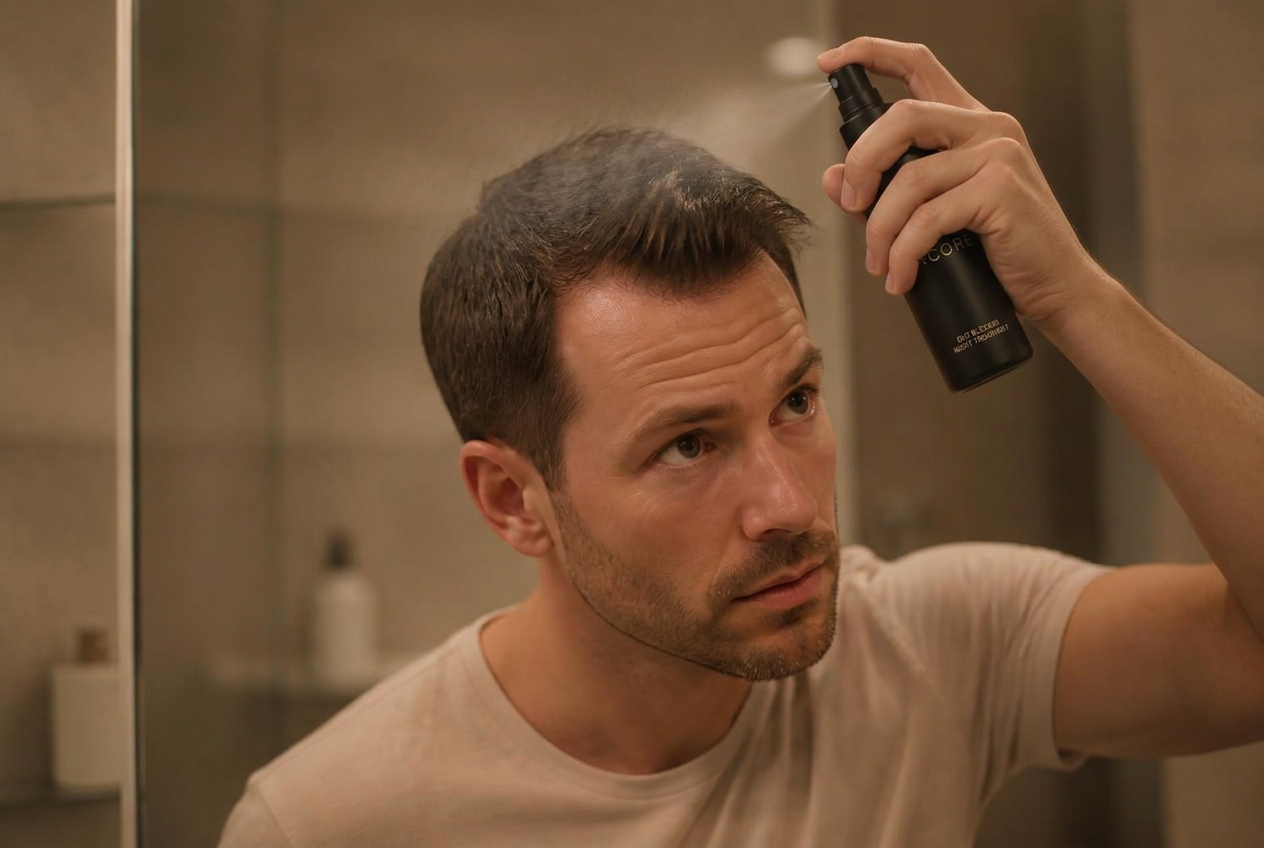
Night
5% minoxidil, four peptides and botanical DHT defense, with no finasteride or dutasteride in any form.
Every Laser Hat includes a free 3-month supply of DHT Blocker.
Finasteride isn't the only option with strong evidence behind it. A 2017 meta-analysis in the Journal of the American Academy of Dermatology pooled randomized, placebo-controlled trials and found that low-level laser therapy produced hair density gains comparable to finasteride — about 18 new hairs per square centimeter for each. A 2026 review of 37 studies and more than 3,000 patients confirmed laser therapy's results, and found even greater gains when it's combined with minoxidil. Neither laser therapy nor minoxidil touches your hormones.
Finasteride and dutasteride work by lowering DHT throughout the entire body, not just the scalp. Our patients describe what that cost them: lost drive, sexual side effects, and mood changes they weren't willing to live with. They're not alone. Regulators in both the U.S. and the U.K. now require warnings about sexual side effects that can continue after stopping the drug, as well as depression and suicidal thoughts. In 2024, the U.K. began putting a patient warning card in every pack of finasteride.
Your grafts are permanent. The hair around them keeps aging, so we plan for the decades after your procedure, not just the first year:
No. Your transplanted hair is DHT-resistant and doesn't need it. Finasteride only affects your native hair, and many of our patients choose not to take it.
No. Your grafts keep their resistance to DHT. What can change over time is the native hair around them, which is why we plan conservatively and recommend a non-hormonal protocol to protect it.
Yes. In published meta-analyses, low-level laser therapy produced hair density gains comparable to finasteride, and combining it with minoxidil improved results further. That combination is the foundation of the Encore Longevity protocol.
This page is for general information and is not medical advice. Talk with your physician before starting or stopping any treatment.