Who is actually doing your procedure?
In some clinics, technicians perform extraction and implantation with minimal oversight. Ask who is physically doing each step, and get the answer in writing.
Why Encore
The Turkish clinic model is an assembly line: large clinics perform as many as 70 procedures a day, with only a few doctors on staff and medical technicians doing the delicate work. The doctor's job becomes putting his name on the case — not his hands on your head.
That's the trade most patients make without being told. The price is low because the labor is unskilled: extraction and implantation are performed by technicians who have never spent a day in medical school, much less earned a board certification — while an MD "monitors" from across the room. Global statistics back this up: over 92% of hair transplants worldwide are performed exactly this way.
And if you insist that a real surgeon perform your procedure? In Turkey, that's positioned as a luxury tier. The up-charge averages $1,500–2,500 — for the one thing that should never have been optional.
Encore is built the opposite way. Three board-certified surgeons. A maximum of three procedures a day, so no case is rushed to make room for the next. Every procedure gets a dedicated surgeon, two licensed technicians, and an anesthesiologist — and the surgeon does the work. It's included in one flat fee, never sold back to you as an upgrade.
What to look for
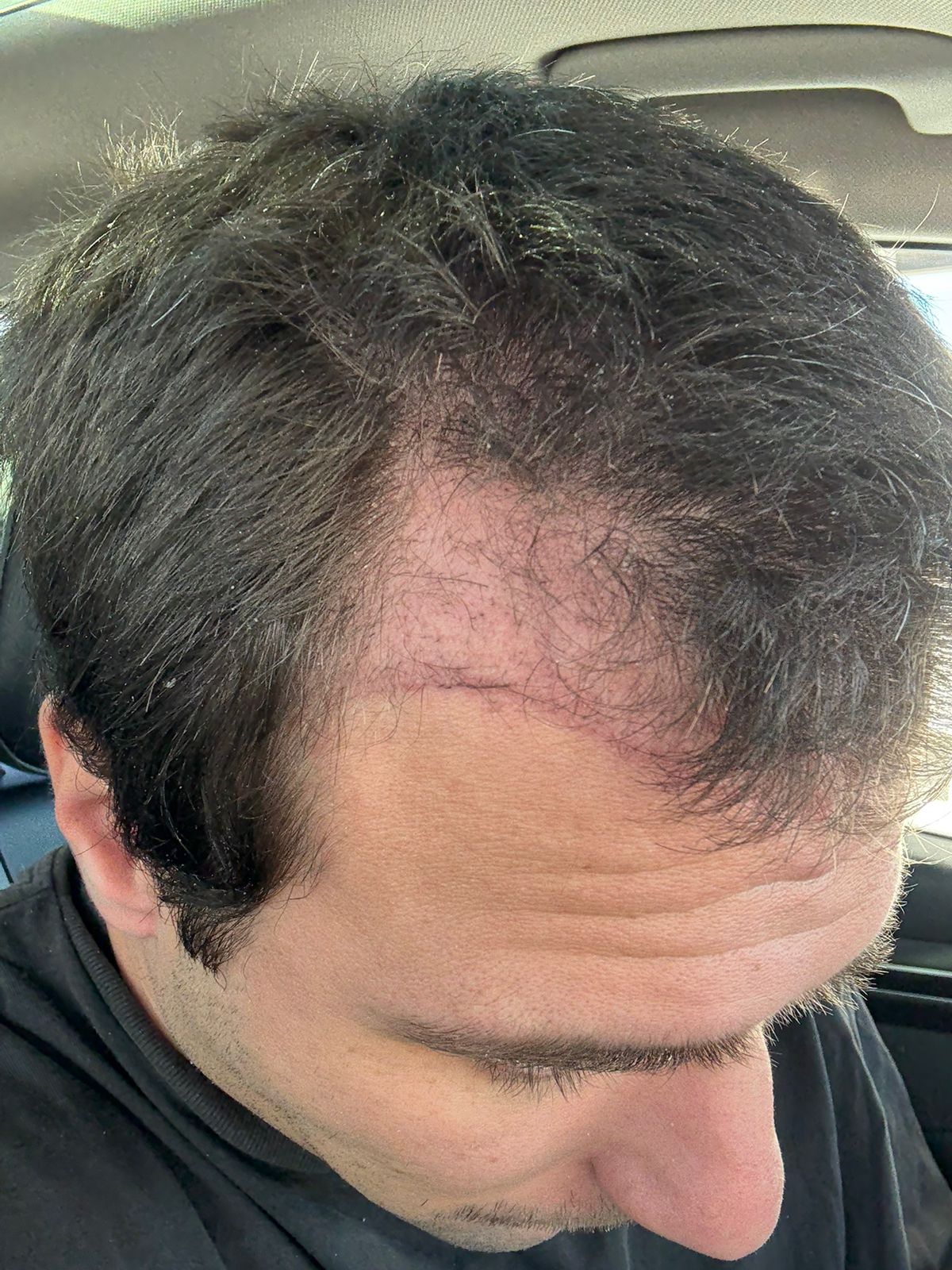
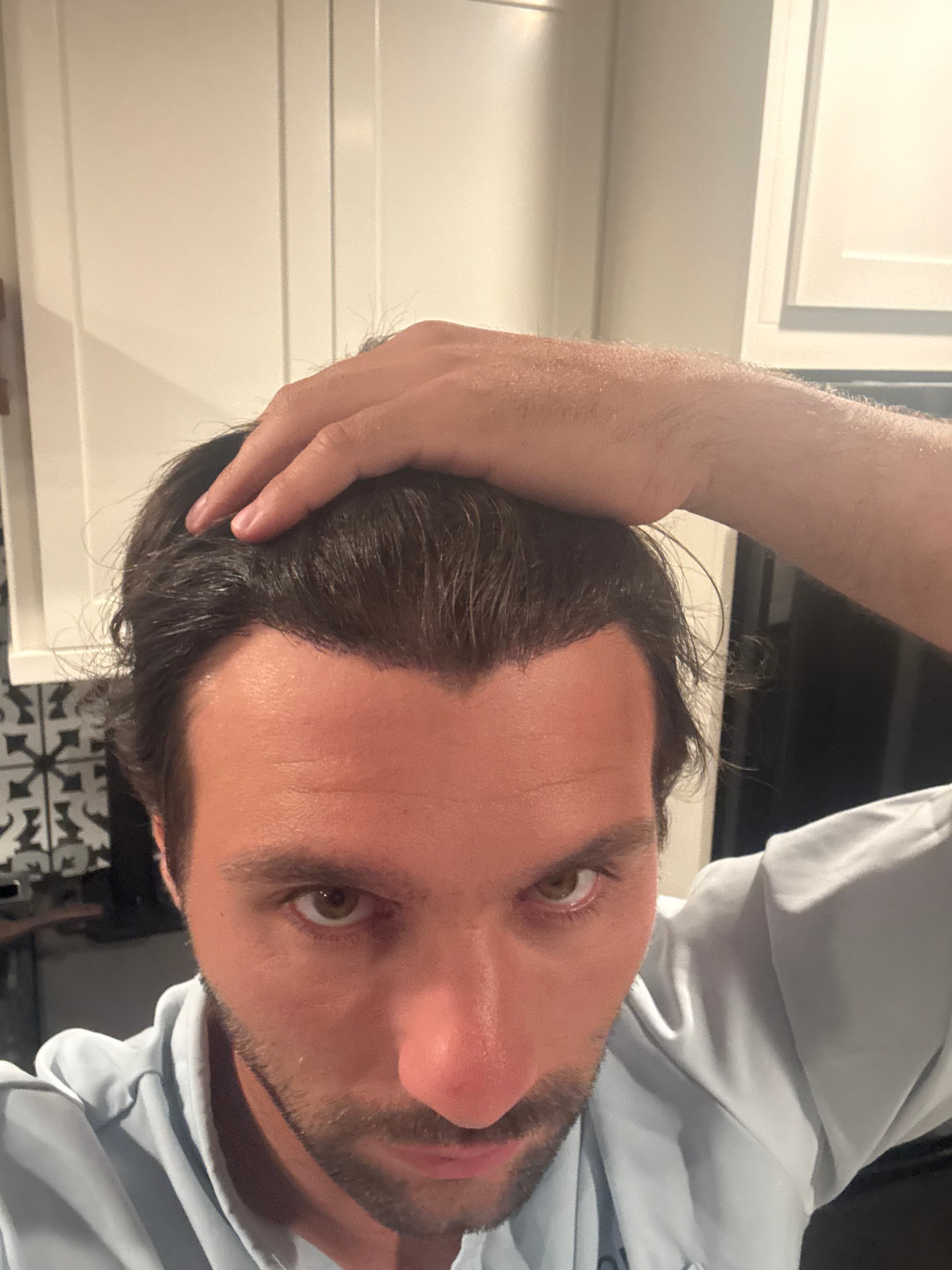
Hairlines are never straight lines or 90-degree angles. Done correctly, a hairline is built around the frontalis muscles in your forehead, not into them.
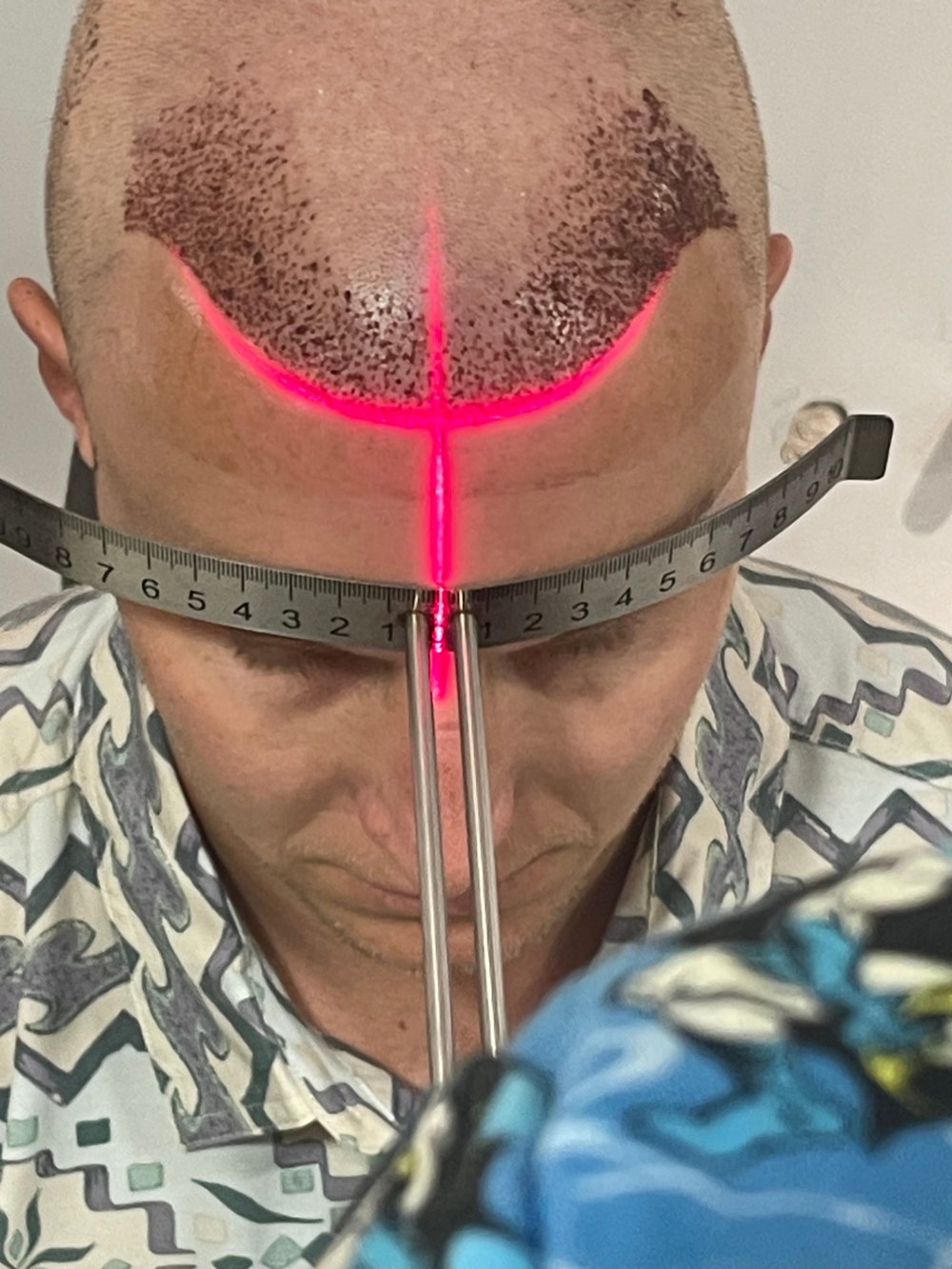
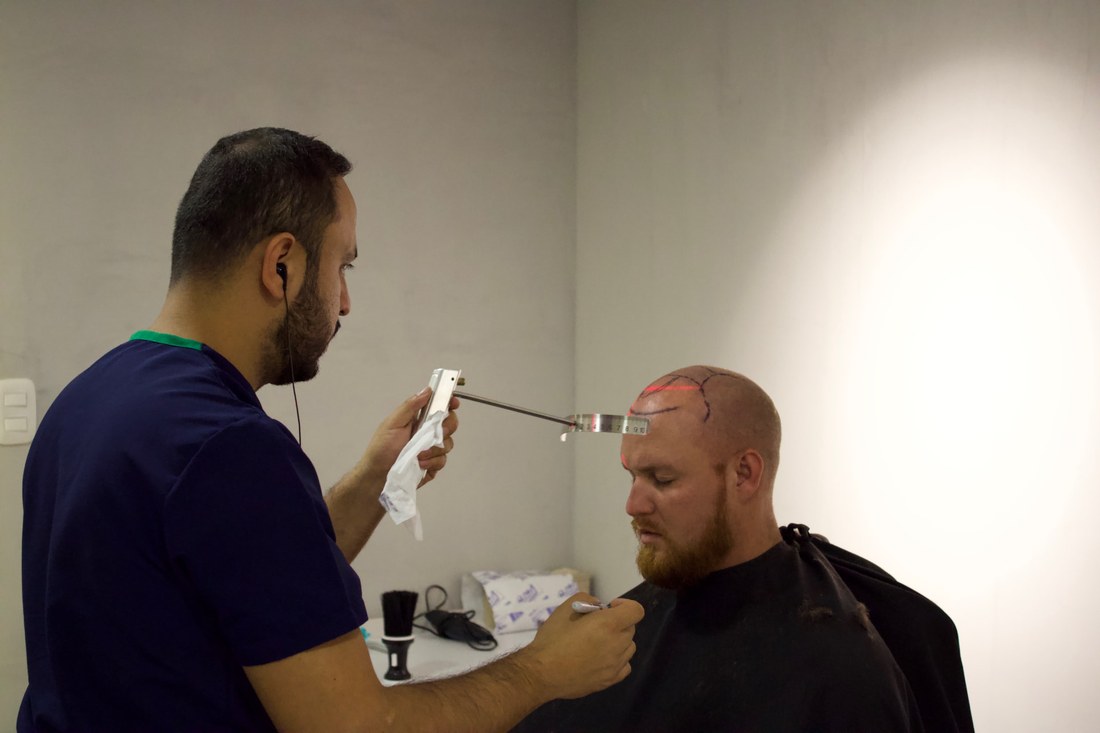
The easiest way to spot a bad transplant is a hairline that looks like someone took a ruler and filled in the hairs. Professional clinics don't draw with rulers — they use precision tools to measure distances from your eyebrows and ears, and they factor in what your natural hairline used to be before drawing anything.
The other massive fail is drawing a hairline too large for the donor hair available. The client ends up with a hairline full of gaps and thin spots — an ambitious outline with nothing to fill it. Density and volume always trump an unrealistic hairline. Natural and aesthetics first.
How clinics get it wrong
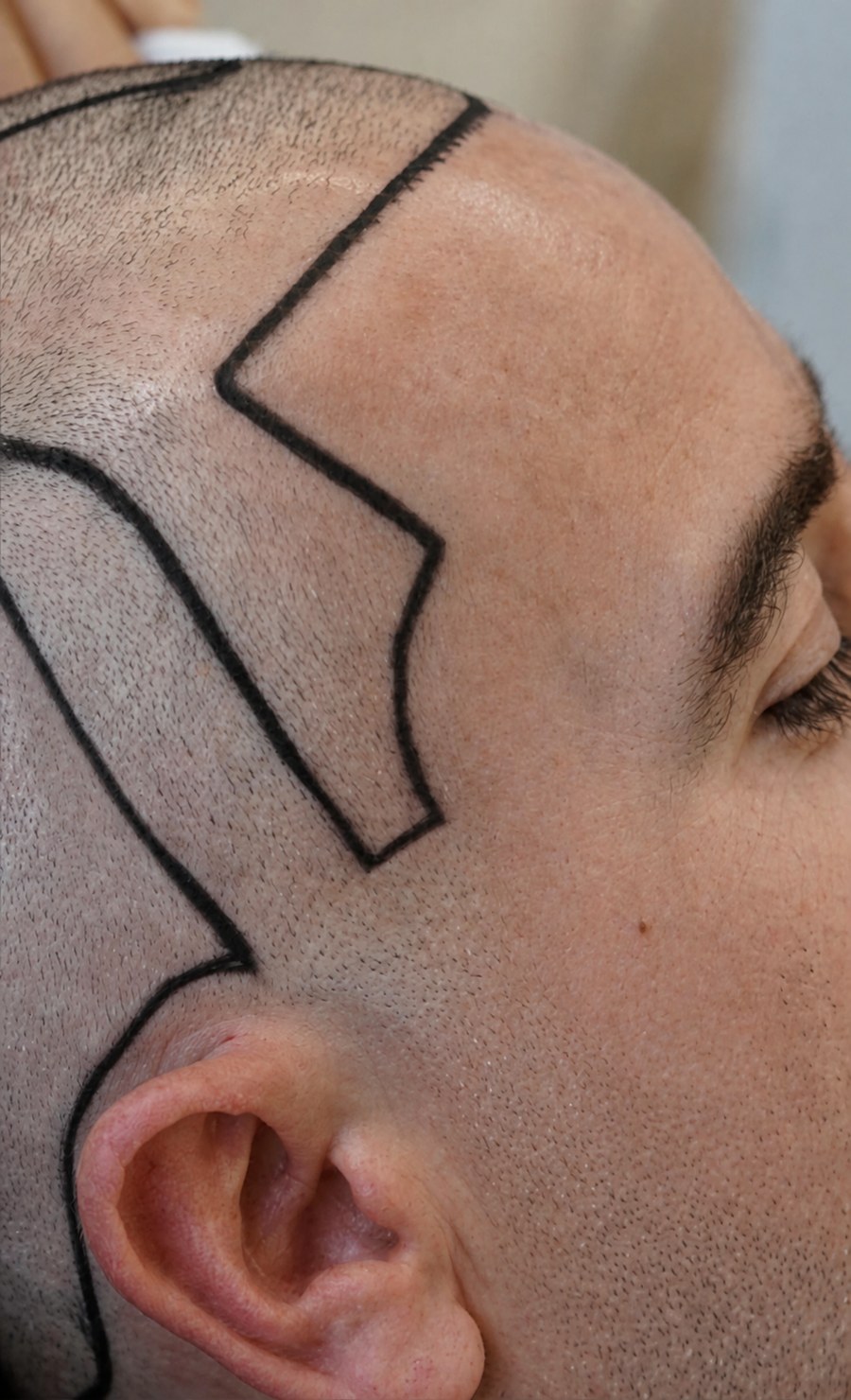
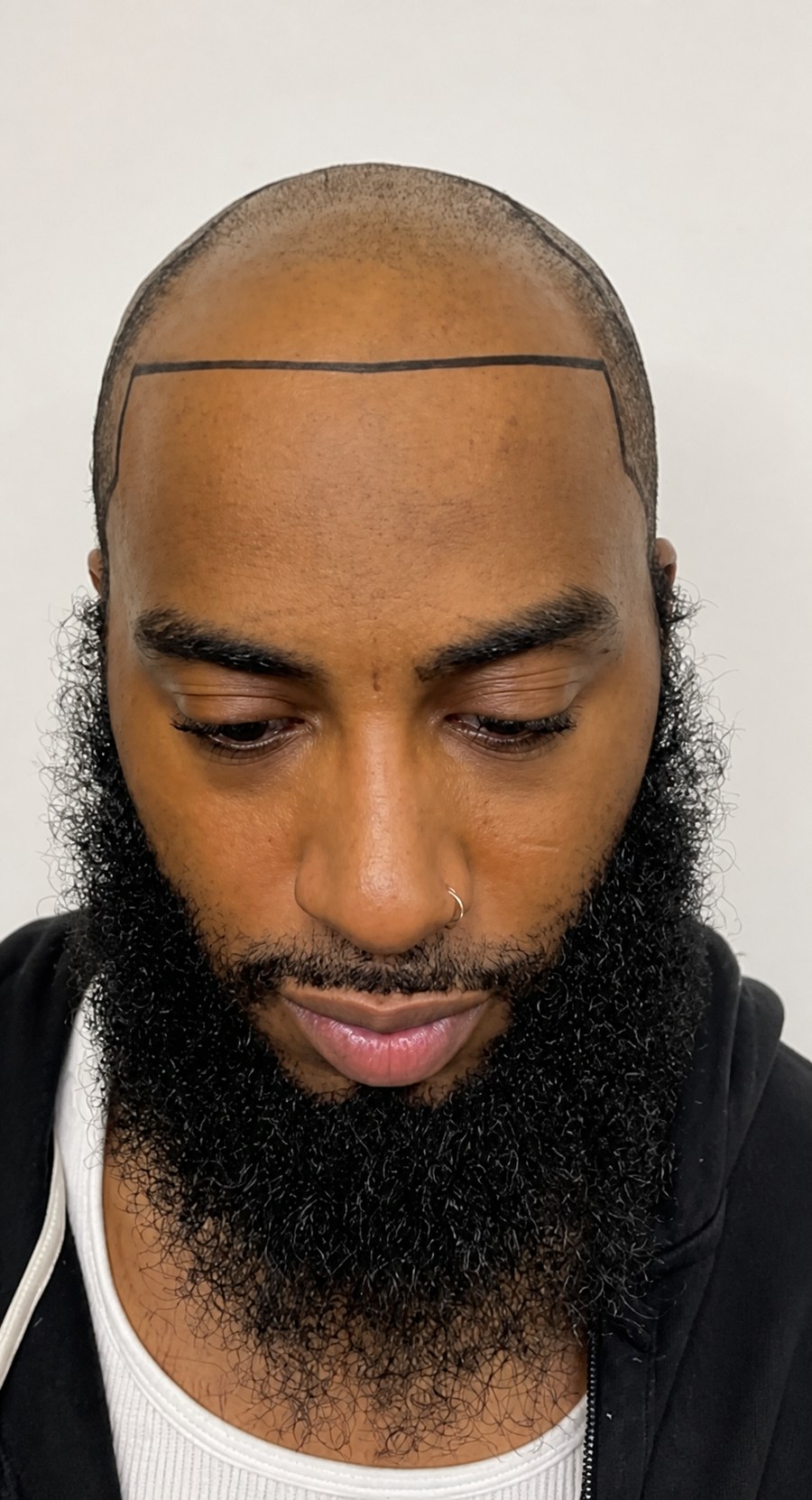
Straight ruler lines, 90-degree corners, and oversized outlines the donor supply can't support. This is what volume-first assembly-line design looks like.
How Encore does it
Laser levels and calipers. Distances measured from the brows and ears, mapped against where your hairline used to be — then designed around the donor volume that can actually fill it.
Safety first
In some clinics, technicians perform extraction and implantation with minimal oversight. Ask who is physically doing each step, and get the answer in writing.
A licensed aesthetic surgery facility that exceeds mandatory hygiene standards, using the latest technology in the transplant space — including the Trivellini System.
You fly home four days after arrival. Check-ins via video call on day 4 and day 10 — and whenever you have questions, your care team answers.
How we work
Your hairline design and procedure are handled by the operating surgeon. We are not a hair mill: with three board-certified surgeons we cap the day at three procedures, and each one is staffed by a dedicated surgeon, two licensed technicians, and an anesthesiologist. The care team arranges your lodging and ground transport so you are not improvising in a city you don't know.
Aftercare follows the Encore protocol: gentle washing, sleep positioning, and the Encore Longevity regimen — red light therapy plus a non-hormonal DHT blocker — to help protect both the transplanted grafts and the native hair around them.
Aftercare · Encore Longevity
A transplant moves DHT-resistant hair into your hairline — but the hair around it keeps aging. Protecting it is the difference between a good year-one result and a great decade-five one.
The Encore Longevity protocol was designed by our own team: red light therapy each morning, Encore Ritual, a four-peptide scalp serum, each night. It’s the regimen we prescribe to every Encore patient to protect the transplanted grafts and the native hair around them.
Morning
A short daily session that strengthens and revitalizes both the new grafts and the native hair around them.
Night
DHT is what thinned your hair in the first place. This keeps chipping away at it — without hormonal side effects.